 Kane & Company
In 1946, a young analyst named Bernard Brodie wrote a sentence that reoriented an entire field:
“Thus far the chief purpose of our military establishment has been to win wars. From now on its chief purpose must be to avert them.”
The insight appears obvious today. At the time, it was revolutionary. Others were asking how to fight the next war better. Brodie asked a different question: what is the weapon actually for? His answer was that its value lay not in what it could do, but in what its possession changed in the calculations of a specific adversary. The objective defines the strategy, not the other way around.
I have come to believe that the strategic sale of a company presents exactly the same problem.
I began my doctoral studies under Brodie at UCLA. When he died before I completed my dissertation, the chair passed to Robert Jervis, later Columbia University’s Adlai E. Stevenson Professor of International Politics. Brodie established that strategy is fundamentally about incentives. Jervis added the indispensable second insight: strategy succeeds or fails according to how decision-makers perceive reality, not merely according to reality itself.
In Perception and Misperception in International Politics, Jervis demonstrated that a signal is not what one party sends, but what the other party receives. The gap between the two is where strategies die.
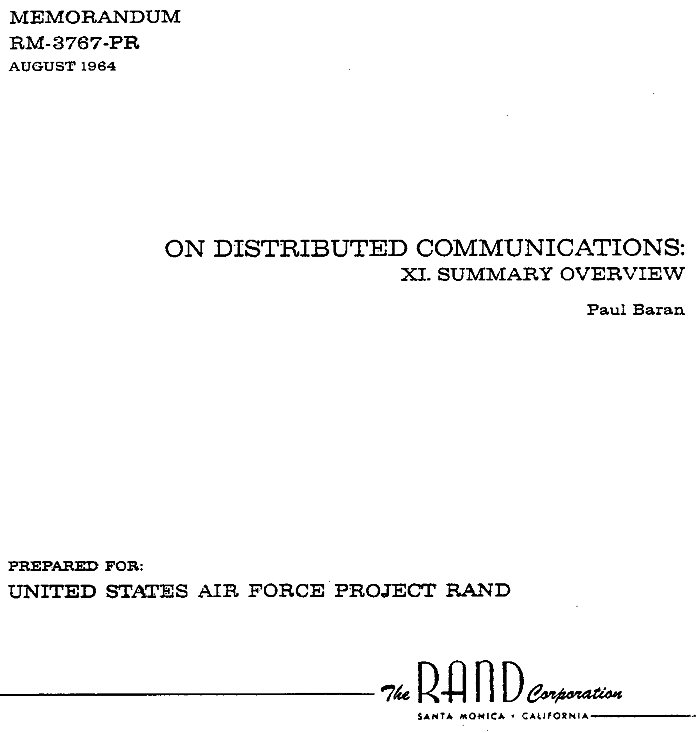
I later joined RAND as a Project Leader in the Systems Sciences Department, an institution built around a simple discipline: establish what is real, understand the causal mechanisms at work, and apply evidence and analysis to determine consequences.


Decades of advising companies through strategic transactions have convinced me that much of the sell-side M&A industry still makes the mistake Brodie corrected in 1946.
The conventional sale process asks: What is this business worth?
The answer is usually a comparable-company multiple, perhaps negotiated upward through a competitive process. The business is valued as it stands today, in isolation, and sold to a buyer assumed to derive roughly similar economics from ownership.
That approach is the transactional equivalent of asking how to fight the war better.
The Brodie question is different: What is this business for in the hands of a specific acquirer?
Not what it earns standing alone, but what ownership changes. What initiative does it accelerate? What capability does it create? What competitive threat does it neutralize? What strategic position does it deny a rival? What future revenue stream does it make possible?
The value of an asset is not always contained within the asset itself. Often it resides in the trajectory it alters for a particular owner.
That principle is the foundation upon which my firm is built. Our objective is not to identify every plausible buyer. It is to identify the specific acquirer for whom the company represents a missing piece in a value story they are already trying to construct. Once identified, the discussion moves beyond comparable multiples and toward the economic value of the future that ownership makes possible.
But Brodie’s insight is only half the solution.
Jervis supplies the second half.
Even when the strategic rationale is correct, decision-makers frequently fail to recognize it. The literature on judgment and decision-making leaves little doubt that sophisticated actors regularly misperceive situations, underestimate opportunities, overestimate risks, and filter information through existing beliefs.
Consequently, it is not enough for a strategic case to be true.
It must be legible.
A banker proclaiming “synergies” is merely sending a signal. Experienced buyers have heard the claim hundreds of times and often discount it immediately. A signal sent is not necessarily a signal received.
The task therefore resembles the construction of an intelligence estimate more than a marketing pitch.
The argument must begin with the acquirer’s own stated objectives. It must trace the precise mechanism through which the target advances those objectives. Each material assertion must be supported with independent, dated, verifiable evidence. The analysis must demonstrate exactly which variables in the buyer’s business model are affected and how.
At that point, the seller does not ask the acquirer to accept the conclusion on faith. The seller presents an auditable chain of reasoning and allows the acquirer’s own team to validate it.
That is how misperception is overcome: not through repetition, but through verifiability.
Deterrence theory and the strategic sale ultimately confront the same problem. In both cases, a rational actor faces an important, largely irreversible decision under uncertainty. In both cases, success depends on incentives rather than assertions. And in both cases, the outcome depends not only on reality itself, but on how reality is perceived.
Brodie taught that the objective defines the strategy.
Jervis taught that the strategy must survive contact with the mind of the decision-maker.
Half a century later, in a very different arena, the lesson remains the same: find what is real. Determine what it is worth to the one actor for whom it is worth the most. Then prove it in terms they cannot misread.
Kane & Company is a private investment bank representing owners and boards in the strategic sale of companies with complex value stories. Member FINRA / SIPC. Begin a confidential inquiry →